

Many people find themselves wondering how long it is until 3:15 PM. Whether you are waiting for an appointment, the end of a class, a work break, or an important event, knowing the remaining time can help you stay on schedule and prepared.
How Long Until 3:15 PM offers a simple and accurate way to track the hours, minutes, and seconds left before your target time. It helps eliminate uncertainty and provides a clear sense of timing throughout the day.
Knowing how much time remains until 3:15 PM can improve productivity and planning. It allows you to prioritize tasks, manage deadlines, and make the most of the time available before your scheduled activity.
Whether you use an online countdown timer, a mobile app, a smartwatch, or a desktop clock, counting down to 3:15 PM is a convenient way to stay focused, organized, and ready for what comes next.
| Current Time | Time Remaining Until 3:15 PM |
| 12:15 PM | 3 hours |
| 12:45 PM | 2 hours 30 minutes |
| 1:15 PM | 2 hours |
| 1:45 PM | 1 hour 30 minutes |
| 2:00 PM | 1 hour 15 minutes |
| 2:15 PM | 1 hour |
| 2:30 PM | 45 minutes |
| 2:45 PM | 30 minutes |
| 3:00 PM | 15 minutes |
| 3:10 PM | 5 minutes |
| 3:14 PM | 1 minute |
| 3:15 PM | Time has arrived! |
You can also read: How Long Until 3:00 PM?
How Long Until 3:15 PM When Time Starts Talking Back
There’s a curious moment that happens while waiting for 3:15 PM. The clock keeps moving forward, but your attention starts moving in circles. You glance at the time, look away, and somehow it feels as if the minutes are watching you right back. In those moments, time stops being a silent measurement and starts feeling like a conversation.
The closer 3:15 PM gets, the stranger the relationship becomes. A single minute can feel impossibly long when you’re waiting for something important, yet entire chunks of the afternoon disappear when your mind wanders elsewhere. It’s almost as if time has its own personality, speeding up when you’re distracted and slowing down when you’re paying attention.
People rarely think about it this way, but waiting often creates an imaginary dialogue with the clock. Every glance seems to ask a question, and every passing minute offers a reply. Not a very helpful reply, usually just another reminder that time moves at its own pace no matter how much we stare at it.
Some thoughts that tend to appear while waiting for 3:15 PM:
- “I could swear more time passed than that.”
- “Why did five minutes feel like twenty?”
- “Wasn’t it almost 3:15 PM a second ago?”
- “Maybe I should stop checking the clock.”
- “Okay… one more check.”
That quiet exchange happens everywhere in offices, classrooms, homes, waiting rooms, and coffee shops. Whether you’re counting down to a meeting, the end of a shift, or something exciting later in the day, the experience is surprisingly familiar.
And that’s why countdown tools feel so satisfying. Whether it’s a live countdown display, a desktop widget, or a simple online timer, they transform waiting into something you can actually see. Instead of wondering how long until 3:15 PM, you watch the answer unfold second by second, as if time itself has finally decided to talk back.
The Hidden Math Behind How Long Until 3:15 PM
Now let’s peek behind the curtain of the countdown, but without turning it into a classroom lecture. Imagine time as a train station where every second is a passenger, every minute is a carriage, and every hour is a full train moving toward one destination: 3:15 PM.
When you ask how long until 3:15 PM, your brain starts performing tiny calculations in the background. Most of the time, you don’t even notice it happening. Yet somehow you instinctively estimate whether the wait is short, long, or somewhere in between.
Behind the scenes, the process usually involves:
- Converting seconds into minutes and minutes into hours
- Calculating the exact time difference between the current moment and 3:15 PM
- Switching between 12-hour and 24-hour time formats
- Adjusting for local time zones and clock settings
- Keeping track of whether the target time is today or tomorrow
That’s where tools like a Calculator, Time Calculator, Date Calculator, or digital countdown timer become useful. They remove the mental effort and instantly provide an accurate answer.
Clocks deserve more credit than they get, too. Whether digital or analog, a clock is constantly translating the movement of time into something humans can understand. It never speeds up, never slows down, and never gets distracted by notifications.
The waiting experience changes depending on where you are in the day:
- Early morning: 3:15 PM feels comfortably far away
- Midday: the countdown suddenly feels more real
- Just before 3 PM: every minute seems to demand attention
- Exactly 3:15 PM: the countdown reaches zero
- After 3:15 PM: the target shifts to the next day
Then there’s the surprisingly common confusion caused by different time formats:
- 15:15 in 24-hour format
- 3:15 PM in 12-hour format
- 3:15 AM when someone accidentally reads it wrong
- 12:00 AM and 12:00 PM, which continue to confuse people around the world
The funny thing is that time itself remains perfectly consistent. The confusion usually comes from us trying to interpret it. Whether you’re reading a wall clock, checking a smartphone, or using an online countdown tool, the answer stays the samethe clock keeps moving steadily toward 3:15 PM, one second at a time.
Living in Pakistan Time and Why 3:15 PM Feels Oddly Specific
In Pakistan, under the steady rhythm of Asia/Karachi Time (PKT), afternoons have a way of lingering. They don’t move with the urgency of the morning or the relief of the evening. Instead, they settle into a slow, familiar pace where 3:15 PM feels oddly important like a small marker planted in the middle of the day.
It’s not a famous hour. It’s not the start of a workday or the end of one. Yet 3:15 PM often becomes a personal deadline, a mental checkpoint, or a promise people make to themselves. Somewhere between lunch and evening plans, it quietly earns significance.
People often associate 3:15 PM with things like:
- finishing a task they’ve been postponing
- returning to work after a break
- school pickups and after-school routines
- afternoon tea or coffee
- “I’ll start after 3 PM” plans that finally become real
There’s something uniquely relatable about waiting for a specific afternoon time. The day feels far enough along that you’ve accomplished something, but close enough to evening that you start thinking about what comes next.
A common feeling during this part of the day sounds something like:
“The morning disappeared somehow, but the afternoon is taking its time.”
Whether that’s completely true or not, it captures how many people experience the hours leading up to 3:15 PM.
To make sense of these moments, people rely on all kinds of digital tools:
- Time Calculator
- Time Zone Converter
- Countdown Timer apps
- Online countdown websites
- Calendar reminders and scheduling tools
- Digital clocks and smartwatch notifications
These tools do more than display numbers. They transform waiting into something visible. Instead of wondering whether 3:15 PM is near or far, you can watch the remaining minutes shrink in real time.
And perhaps that’s why 3:15 PM feels so oddly specific. It’s precise enough to matter, ordinary enough to appear in everyday life, and close enough to the middle of the afternoon that it becomes a natural target for plans, promises, and little moments of anticipation. In Pakistan’s unhurried afternoon atmosphere, that tiny point on the clock can end up carrying far more meaning than anyone expects.
How Long Until 3:15 PM Tools, Apps, and Digital Waiting Rooms
Waiting for 3:15 PM used to mean occasionally glancing at a wall clock. Now it often means opening a browser tab, checking a smartphone widget, or staring at a countdown that updates every second. Modern technology has transformed waiting into a strangely interactive experience.
The moment you search for “How Long Until 3:15 PM,” you enter what could be called a digital waiting rooma space where software quietly tracks time on your behalf. Instead of estimating the remaining hours and minutes, you watch them disappear in real time.
People use a surprising variety of tools for this purpose:
- Online Countdown Timers
- Countdown Timer Apps
- Digital Clock Widgets
- Smartwatch Reminders
- Calendar Notifications
- Time Calculators
- Date Calculators
- Productivity Dashboards
- Event Countdown Platforms
Each tool serves the same basic goal: making the invisible passage of time visible.
A countdown timer is especially satisfying because it turns waiting into something measurable. Hours become minutes. Minutes become seconds. Suddenly, the distant 3:15 PM you were thinking about this morning feels close enough to touch.
Some people even keep countdowns running in the background while working. The timer becomes a silent companion, quietly counting down to a meeting, a school pickup, a break, or the end of a task. Every glance offers a small update from the future.
Common thoughts during a digital countdown include:
- “Wow, there’s less time left than I thought.”
- “How did thirty minutes disappear so quickly?”
- “Only ten minutes to go.”
- “I’ll finish this before the timer hits zero.”
- “Why am I checking again when the countdown is right there?”
The interesting part is that these tools don’t actually make time pass faster. They simply make it easier to understand. By displaying every second, they reduce uncertainty and give structure to waiting.
In a world filled with schedules, notifications, and deadlines, countdown apps and timer websites have become modern waiting rooms. Whether you’re preparing for an event or simply curious about how long until 3:15 PM, these digital tools help transform anticipation into something you can watch unfold one second at a time.
Emotional Countdowns and the Psychology of Waiting for 3:15 PM
A countdown is never just about numbers. When you’re waiting for 3:15 PM, the clock may be measuring time, but your mind is measuring something else entirely. That’s why the same fifteen minutes can feel completely different depending on what you’re waiting for.
Psychologists have long observed that humans don’t experience time objectively. We experience it emotionally. If 3:15 PM marks the start of something exciting, the remaining minutes may seem painfully slow. If it signals an important deadline or a difficult meeting, time can feel heavy and stretched. Yet during a busy afternoon, those same minutes might disappear before you even notice them.
The emotional meaning attached to 3:15 PM often comes from what happens at that moment:
- A scheduled phone call
- The end of a class or work session
- Meeting a friend
- Taking a break
- Receiving important news
- Starting a planned activity
The stronger the emotional connection, the more attention we give to the clock.
This creates a familiar mental cycle. You check the time, estimate how long is left, return to what you’re doing, and then check again sooner than you intended. The countdown becomes a quiet background thought that keeps pulling your attention back toward the future.
Many people recognize thoughts like these:
- “Surely more time has passed than that.”
- “Why is the clock moving so slowly today?”
- “I’ll just check one more time.”
- “It feels like 3:15 PM should be here already.”
- “How did an entire hour disappear?”
The answer lies partly in attention. When we focus on waiting, we become more aware of every passing minute. When we’re engaged in something enjoyable or demanding, our attention shifts elsewhere, making time seem to move more quickly.
There is also an element of anticipation. Humans naturally look ahead to upcoming events, and a specific time like 3:15 PM gives that anticipation a target. The countdown becomes a bridge between the present moment and whatever comes next.
Quick Mental Reminders While Waiting for 3:15 PM
Sometimes the best countdown tool isn’t a calculator, a timer app, or a digital clock. It’s just the strange little voice in your head trying to negotiate with time. While waiting for 3:15 PM, people often create tiny mental reminders that make the wait feel more manageable.
These reminders aren’t scientifically optimized. Nobody published them in a productivity journal. They simply emerge from the universal experience of staring at a clock and hoping the next glance shows a bigger jump than expected.
Some common self-reminders sound like this:
- “It’s not 3:15 PM yet, relax.”
- “I’ll check the time after I finish this.”
- “Surely it’s closer now.”
- “Stop looking at the clock every thirty seconds.”
- “Time is moving, my patience isn’t.”
- “When 3:15 PM arrives, today’s mission changes.”
- “If I missed it, I’m choosing temporary denial.”
- “Afternoons somehow stretch differently.”
- “Maybe thinking less about time helps.”
- “Just one more glance and then I’m done.”
The funny thing is that these thoughts create a structure around waiting. They give your brain something to do while the clock quietly handles the actual countdown. Instead of focusing on every passing second, you build a small narrative that carries you toward the target time.
How Long Until 3:15 PM
“How long until 3:15 PM?” is a simple question on the surface, but it usually carries a mix of timing, planning, and quiet anticipation underneath. In Pakistan’s Asia/Karachi Time Zone (PKT), this moment often sits right in the middle of the afternoon rhythm when the day feels both active and slightly slow at the same time.
The actual answer depends on the current time, but the idea behind the question stays the same: measuring the gap between “now” and a very specific point in the day. That gap might be a few minutes or a few hours, but psychologically it always feels more important than it looks on a clock.
People ask this question for all kinds of reasons:
- waiting for a meeting or call
- counting down to a break or school dismissal
- planning tasks after a fixed time
- simply tracking the slow flow of the afternoon
- or just curiosity about how much of the day is left
In practical terms, the calculation is straightforward. You take the current time, compare it with 3:15 PM (15:15 in 24-hour format), and find the difference in hours and minutes. Behind the scenes, clocks and apps quietly handle conversions between 12-hour and 24-hour formats so you don’t have to think about it.
Creative ways people use countdown thinking in real life
Not everything about waiting is passive. For many people, the countdown to 3:15 PM becomes a way to create structure in the middle of the day rather than just sit and watch the clock.
Some turn it into a small system of focus and motivation:
- Using event countdown timers to stay aware of time progress
- Setting reminders through calendar planning tools
- Tracking tasks with interactive countdown displays
- Building daily habits around checkpoints like 3:15 PM
- Using web-based clock tools for focused work sessions
- Organizing study or work blocks around fixed time targets
In some classrooms and learning environments, educators even encourage time-based task planning, where students divide their work according to specific time markers instead of vague deadlines. It helps turn abstract “finish later” thinking into something more concrete and manageable.
In this way, 3:15 PM is no longer just a point on the clock. It becomes a small but meaningful structure in the data mini deadline that quietly shapes decisions, focus, and productivity in everyday life.
FAQs
How long until 3:15 PM?
It depends on your current local time in Asia/Karachi Time (PKT). You simply calculate the difference between now and 3:15 PM (15:15 in 24-hour format) to get the remaining hours and minutes.
Why do people check how long until 3:15 PM so often?
People check it because 3:15 PM often represents a personal checkpoint like a break, meeting, school schedule, or task deadline, making it feel more important than a regular time on the clock.
What tools can help track time until 3:15 PM?
Common tools include countdown timers, calendar apps, time calculators, clock widgets, and online countdown websites that show real-time remaining minutes and seconds.
Why does waiting for 3:15 PM feel slow sometimes?
Time feels slower when you focus on it. When attention is fixed on the clock, each minute feels longer, especially during quiet or repetitive afternoon periods.
Is 3:15 PM a special time?
Not officially, but it becomes “special” when people attach meaning to it such as routines, breaks, or daily planning habits.
Conclusion
Waiting for 3:15 PM is not just a matter of tracking minutes on a clock. It is a blend of planning, anticipation, and attention. In Pakistan’s afternoon rhythm, time often feels stretched, making specific moments like 3:15 PM stand out as small milestones in an otherwise continuous flow of the day.
Whether people use digital tools, countdown apps, or simple mental reminders, the purpose remains the same: to make time visible and manageable. In doing so, 3:15 PM becomes more than just a timestamp; it turns into a structured point of focus in everyday life, quietly shaping routines, decisions, and expectations.
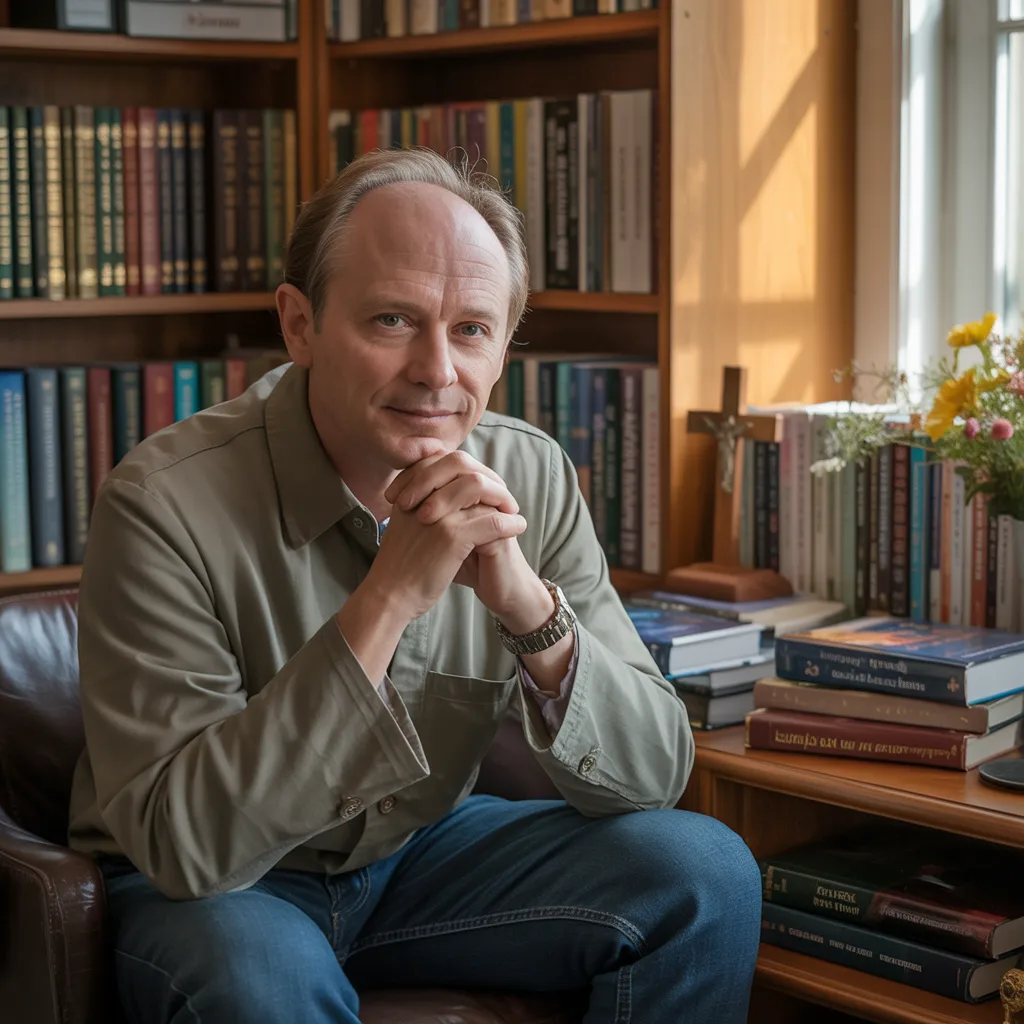
Allex is a Christian writer and the founder of Pray Stocker, where he shares prayers, devotionals, and faith-based encouragement to inspire and uplift readers in their spiritual journey.